Leave Your Message
London’s VR market is becoming more practical, measurable, and demanding. Visitors now expect more than a headset and a dark room. They want responsive tracking, clear storytelling, comfortable equipment, and reliable staff support.
PwC’s Seeing Is Believing report estimated that virtual and augmented reality could contribute up to 1.5 trillion US dollars to the global economy by 2030. It also projected 23.3 million jobs connected to VR and AR applications. These figures show strong potential, but they do not guarantee success for every supplier. Venue size, hardware maintenance, hygiene procedures, content localization, and after-sales support still determine customer satisfaction.
In this guide, China Top 10 VR Experience London Suppliers? means suppliers with practical value for London venues, agencies, museums, retailers, and event companies. The evaluation should consider product quality, delivery capability, software flexibility, certifications, technical support, and evidence from real installations. Price alone is a weak measure.
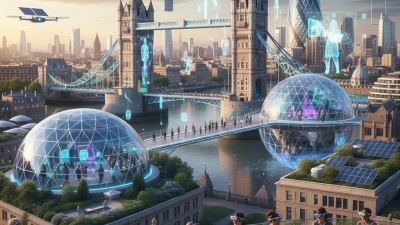
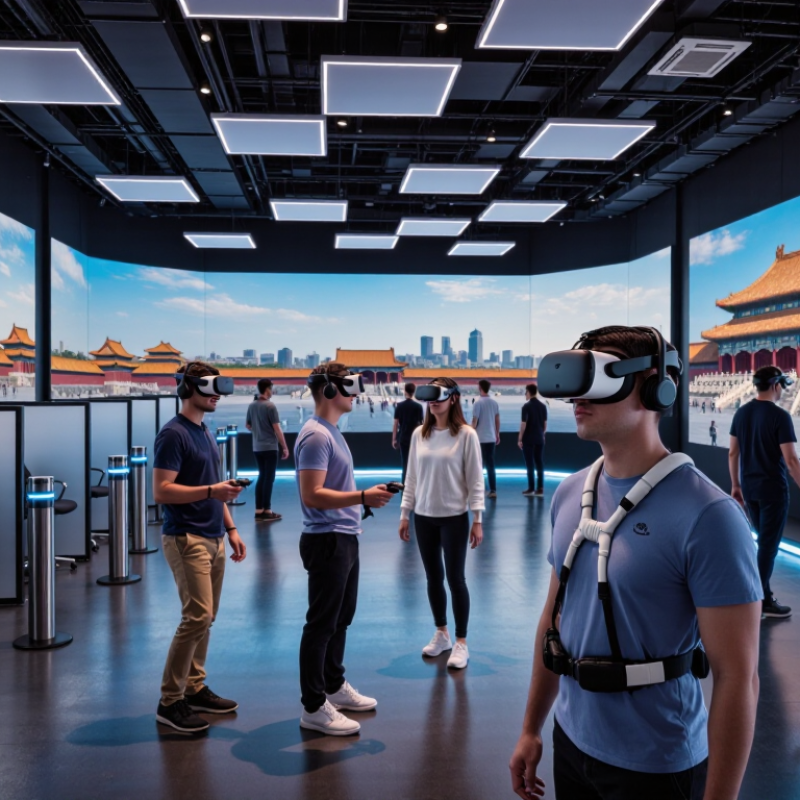
Professor Mel Slater, a leading virtual-reality researcher, describes presence as “the sense of being in the virtual environment.” That principle matters in London. A visitor standing in a small event space should still feel transported, whether exploring a Chinese palace or a future city.
The list will not pretend to be perfect. Supplier rankings change quickly. Public case studies can also be incomplete. Therefore, readers should verify demonstrations, warranties, compliance documents, and local support before purchasing. A polished demo is not enough. Reliability is experienced during the busy Saturday session.
China Top 10 VR Experience London Suppliers?
Understanding China’s VR Experience Supplier Landscape in London
China’s VR experience supplier landscape in London covers headsets, motion platforms, interactive walls, and turnkey exhibition systems. Many suppliers offer competitive manufacturing, flexible customization, and rapid hardware upgrades. However, price alone rarely predicts project success. A reliable supplier should explain headset specifications, tracking accuracy, content ownership, delivery schedules, and after-sales support in clear English.
London venues often have strict space, fire safety, accessibility, and electrical requirements. Suppliers should provide installation drawings, risk assessments, user instructions, and appropriate compliance documentation. Ask whether equipment supports UK power standards and local maintenance arrangements. A demonstration unit can reveal practical issues, such as uncomfortable facial interfaces, noisy cooling fans, or delayed controller responses. Small details matter.
Experience with museums, shopping centres, training rooms, and temporary events is valuable. Request recent project references, measurable performance data, and a realistic replacement-parts plan. Remote support may solve software errors, but it cannot always fix a damaged tracking camera during a busy weekend. This is where some supplier proposals feel optimistic. Buyers should test content loading, network stability, cleaning procedures, and staff training before signing a large contract. A short pilot in the actual London venue can expose lighting problems, narrow access routes, and visitor-flow weaknesses that online meetings usually miss.
| Screening Position | Supplier Profile | Primary China Operating Base | London Delivery Model | Core VR Experience Capability | Typical Project Scale | Indicative Lead Time | Common Compliance Documentation | London Project Fit |
|---|---|---|---|---|---|---|---|---|
| 01 | Large integrated studio End-to-end design, hardware integration and on-site deployment |
Shenzhen, Guangdong | Remote production with local installation partners in the United Kingdom | Free-roam VR, interactive projection, multi-user tracking and custom content | Permanent attractions and large exhibitions | 12–24 weeks | CE/UKCA-related product files, electrical test records, risk assessment and method statement | Tourist attractions, museums and destination venues |
| 02 | Immersive content specialist Strong emphasis on storytelling and 3D production |
Shanghai | Content production in China with London-based technical coordination | 360-degree video, real-time 3D environments, narrative VR and interactive media | Medium-to-large cultural and commercial installations | 10–20 weeks | Content usage permissions, accessibility plan, data-processing documentation and venue risk assessment | Brand experiences, cultural programmes and education |
| 03 | Arcade and entertainment integrator Focused on repeatable, visitor-operated experiences |
Guangzhou, Guangdong | Equipment shipment with commissioning support and operator training | VR rides, simulator units, multiplayer arcade systems and ticketed attractions | Retail venues, family entertainment centres and pop-ups | 8–16 weeks | Equipment manuals, conformity records, emergency procedures and maintenance schedules | High-throughput venues with controlled operating hours |
| 04 | Enterprise training provider Designed for structured learning and simulation workflows |
Beijing | Cloud-supported deployment with local user training and technical support | Industrial simulation, safety training, soft-skills scenarios and digital twins | Corporate, academic and public-sector training rooms | 10–18 weeks | Information-security controls, user documentation, accessibility considerations and health-and-safety procedures | Universities, transport, manufacturing and professional training |
| 05 | Hardware-led VR systems supplier Prioritises reliable equipment packages and integration |
Dongguan, Guangdong | Export shipment supported by a UK systems integrator or installer | Head-mounted displays, motion platforms, tracking systems and control cabinets | Small-to-medium installations and equipment upgrades | 6–14 weeks | Technical specifications, electrical safety records, warranty terms and spare-parts list | Existing venues requiring hardware replacement or expansion |
| 06 | Location-based VR developer Specialised in managed, multi-user visitor journeys |
Hangzhou, Zhejiang | Turnkey package with remote monitoring and scheduled London maintenance visits | Room-scale VR, multiplayer missions, queue management and session analytics | Permanent commercial entertainment venues | 12–22 weeks | Occupancy guidance, cleaning procedures, incident logs, software support terms and insurance information | High-footfall entertainment and leisure locations |
| 07 | Creative technology workshop Flexible team for experimental and bespoke installations |
Chengdu, Sichuan | Hybrid collaboration with London creative agencies and production teams | Gesture interaction, spatial audio, projection mapping and mixed reality | Short-term exhibitions, festivals and cultural pilots | 6–14 weeks | Event risk assessment, equipment inventory, content permissions and temporary-installation plan | Festivals, galleries, public art and launch events |
| 08 | Education and STEM VR supplier Provides repeatable curriculum-oriented learning modules |
Nanjing, Jiangsu | Digital delivery with hardware supplied through an education procurement partner | Virtual laboratories, technical visualisation, classroom VR and assessment modules | Schools, colleges and university departments | 8–16 weeks | Safeguarding procedures, accessibility statement, privacy information and teacher operating guides | Educational institutions and public learning venues |
| 09 | Simulation and visualisation provider Combines VR with engineering and architectural data |
Wuhan, Hubei | Remote technical delivery with London-based project management | CAD/BIM visualisation, infrastructure simulation, control-room training and data visualisation | Professional demonstrations and technical workshops | 8–18 weeks | Data-security controls, software licensing records, technical drawings and user acceptance tests | Built environment, infrastructure and engineering sectors |
| 10 | Pop-up VR experience operator Optimised for quick deployment and campaign-based activation |
Foshan, Guangdong | Portable equipment shipped to London with temporary event support | Portable VR booths, branded environments, short-form games and visitor analytics | Temporary activations and small-to-medium events | 4–10 weeks | Event method statement, public-liability insurance details, equipment checks and operator briefing | Trade shows, shopping centres and corporate events |
Data note: The positions are a practical supplier-profile framework rather than an independently audited ranking. Lead times, compliance requirements, shipping arrangements and London support coverage vary by project and should be verified during procurement.