How to Choose the Best Virtual Reality Technology for Business?
In recent years, Virtual Reality Technology has transformed the business landscape. Companies are increasingly exploring this innovative tool to enhance customer experiences and streamline operations. As Dr. Jane Holloway, a leading expert in Virtual Reality Technology, aptly points out, “The right technology can elevate a brand's engagement and operational efficiency.” This statement underscores the importance of methodically selecting the best virtual reality solutions available.
However, navigating the myriad options can be daunting. Each technology offers unique benefits and challenges. Factors such as interactivity, user-friendliness, and integration capabilities need careful evaluation. Businesses may find themselves overwhelmed by flashy marketing. It's crucial to identify what aligns best with specific goals.
Making an informed decision on Virtual Reality Technology requires thorough research. Companies must consider long-term impacts versus short-term gains. While some solutions appear attractive upfront, they may pose limitations down the road. A thoughtful approach ensures that an organization’s investment truly enhances its objectives and overall strategy.
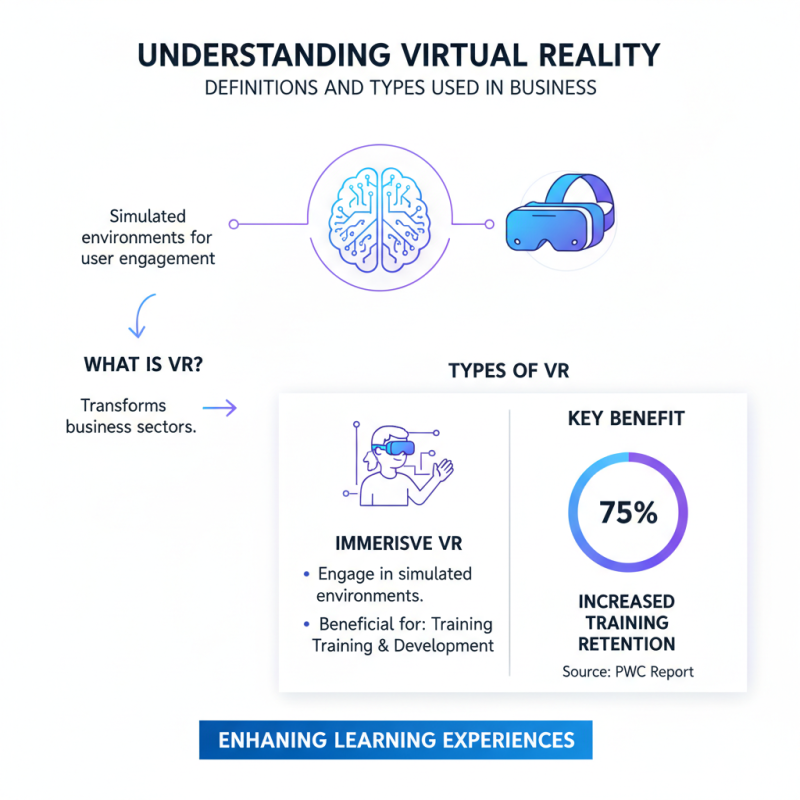
Understanding Virtual Reality: Definitions and Types Used in Business
Virtual reality (VR) is transforming various business sectors. It's crucial to grasp the different types of VR technologies available. Immersive VR allows users to engage in simulated environments, beneficial for training and development. According to a report from PwC, immersive VR can increase training retention rates by up to 75%. This data underscores the effectiveness of VR in enhancing learning experiences.
Another type is non-immersive VR, where users interact with virtual elements on screens. This type is ideal for marketing and product demonstrations. It provides flexibility and accessibility, reaching a broader audience without the need for specialized equipment. A study by MarketsandMarkets projected that the VR market will surpass $57 billion by 2027, indicating the growing importance of VR adoption in business strategies.
Additionally, augmented reality (AR) is an evolving technology. While different from VR, it complements VR by overlaying digital content in the real world. This can be particularly useful for industries like retail, where customers can preview products. The challenge lies in ensuring that the technology aligns with business goals and enhances user experience. Understanding these nuances is essential for companies looking to implement VR effectively.
Assessing Business Needs: Choosing VR for Training, Marketing or Design
When assessing business needs for virtual reality (VR), it's crucial to pinpoint specific applications. VR can significantly enhance training, marketing, and design. According to a report by PwC, VR training can increase retention rates by up to 75% compared to traditional methods. This statistic highlights the potential of VR in effective employee development.
In marketing, immersive experiences can engage customers profoundly. A study from the International Data Corporation (IDC) noted that 71% of consumers prefer brands that provide immersive experiences. This statistic suggests that businesses seeking to enhance customer interaction should consider VR marketing strategies. However, not all businesses are equipped to adopt VR seamlessly. Organizations often struggle with integrating VR tech into existing workflows. This indicates a need for thorough assessment before implementation.
Design teams can also benefit from VR technology. By enabling virtual prototyping, teams can visualize products without extensive physical materials. However, the initial costs of VR systems can be a concern, with investment often needed upfront. Businesses must weigh the long-term benefits against immediate financial implications. Understanding these dynamics will help companies make informed decisions about adopting VR for their unique needs.
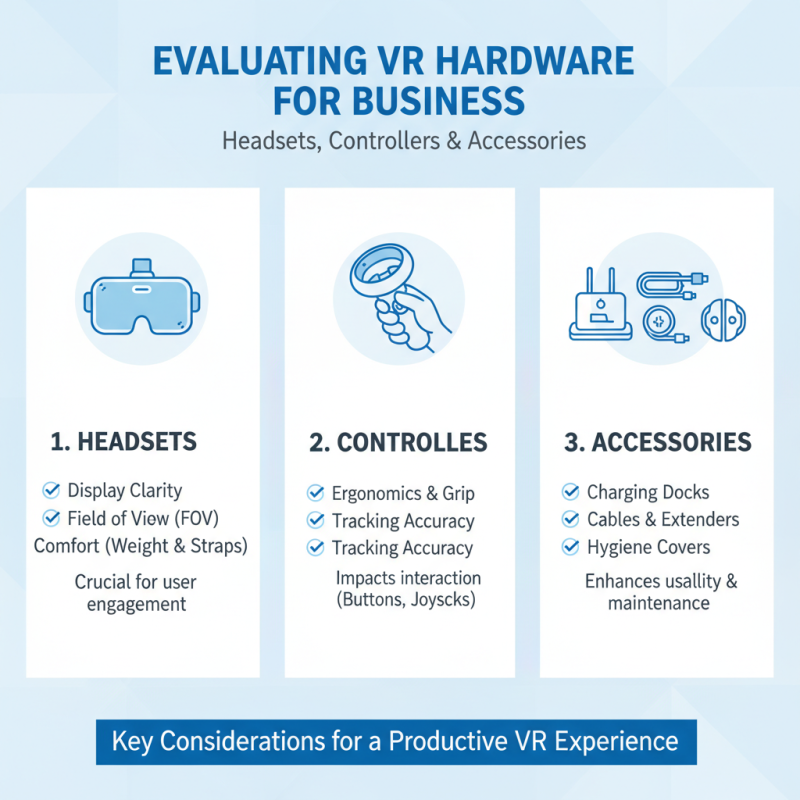
Evaluating Hardware Options: Headsets, Controllers, and Accessories
When considering virtual reality technology for business, evaluating hardware is crucial. Start by assessing headsets. The display clarity, field of view, and comfort level greatly impact user experience. An uncomfortable headset can limit engagement. Look for options with adjustable straps and suitable weight.
Controllers are another essential aspect. Choose controllers that feel natural and intuitive. They should allow for seamless interaction within the virtual environment. Check for feedback mechanisms, like haptics, to enhance immersion. Not all controllers offer the same features, so testing them beforehand is wise.
Tips to enhance your evaluation: Test multiple options in real-world scenarios. This can help identify the best fit for your business needs. Gather feedback from users. Understand their preferences and frustrations. Sometimes, what seems perfect on paper may not resonate in practice. Be open to adapting your choices based on real user experience and comfort.
Analyzing Software Solutions: Platforms for VR Content Creation and Usage
When exploring virtual reality (VR) for business, selecting the right software solution is critical. Organizations need platforms that cater to their specific needs. A user-friendly interface is essential. It allows team members to navigate the technology without extensive training. Look for tools that offer a variety of content creation features. These include 3D modeling, animation, and interactive environments. The potential to customize content can greatly enhance user engagement.
Another important aspect is the compatibility of the software with existing hardware. Businesses should assess the VR system’s ability to integrate seamlessly with current devices. This integration can often be overlooked, leading to frustrating user experiences. In addition, the level of support and community around the platform can be a significant factor. Reliable support can help mitigate challenges when adopting new technologies.
Feedback from users is equally essential in this decision-making process. Understanding common pain points can guide businesses in their selection. While VR holds impressive potential, it’s not perfect. Evaluating user reviews can shed light on areas that may need improvement. Businesses must remain flexible and be willing to adapt as technology evolves. Embracing this mindset can lead to more effective use of VR solutions in the workplace.
Virtual Reality Technology Adoption in Business Sectors
Budgeting for VR Implementation: Costs, ROI, and Long-term Investments
Budgeting for virtual reality (VR) implementation requires careful analysis. Businesses must account for initial setup costs, software acquisition, and ongoing maintenance. Hardware investments may vary significantly based on technology choices. It's essential to explore both the tangible and intangible benefits of VR to assess potential returns. Sometimes, underestimated costs can arise unexpectedly, affecting the overall budget.
Calculating return on investment (ROI) is complex for VR projects. While it might provide enhanced training experiences or customer interaction, quantifying these benefits poses challenges. Companies should identify specific performance metrics to evaluate success. Additionally, long-term investments in VR may yield more substantial returns as technology evolves. Regularly revisiting budget plans helps organizations stay aligned with their business goals. Reflecting on past experiences will aid in better decision-making for future initiatives.
How to Choose the Best Virtual Reality Technology for Business? - Budgeting for VR Implementation: Costs, ROI, and Long-term Investments
| Dimension |
Details |
Estimated Cost (USD) |
Expected ROI (%) |
Long-term Investment (Years) |
| Hardware |
VR Headsets and Controllers |
$1,200 |
25% |
3-5 Years |
| Software |
Custom VR Applications |
$10,000 |
40% |
5-7 Years |
| Training |
VR Training Modules |
$5,000 |
30% |
2-4 Years |
| Maintenance |
Ongoing Support and Updates |
$2,000/year |
N/A |
N/A |
| Utilization |
Frequency of VR Sessions |
N/A |
N/A |
N/A |