Why Choose Immersive Training for Your Business Needs?
In today's fast-paced business world, the need for effective training is more critical than ever. Immersive Training is revolutionizing how teams learn and grow. According to Dr. Jane Smith, a leading expert in educational technology, "Immersive Training engages participants like no other method." Her insights highlight the power of this innovative approach.
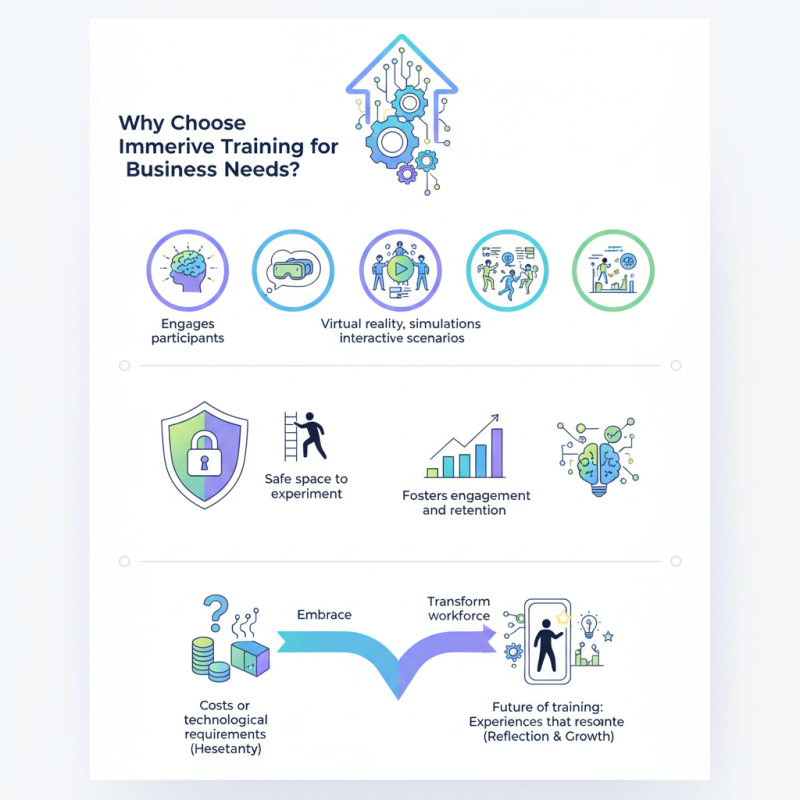
Immersive Training involves virtual reality, simulations, and interactive scenarios. This method allows employees to practice real-life situations without the usual risks. Companies can provide a safe space for employees to experiment and learn. However, some organizations are still hesitant to adopt this training style. They may fear the costs or the technological requirements.
Embracing Immersive Training can transform a workforce. It fosters engagement and retention better than traditional methods. Companies must weigh the pros and cons carefully. The future of training relies on creating experiences that resonate. Immersive Training challenges the status quo, inviting reflection and growth.
Understanding Immersive Training: Definition and Purpose
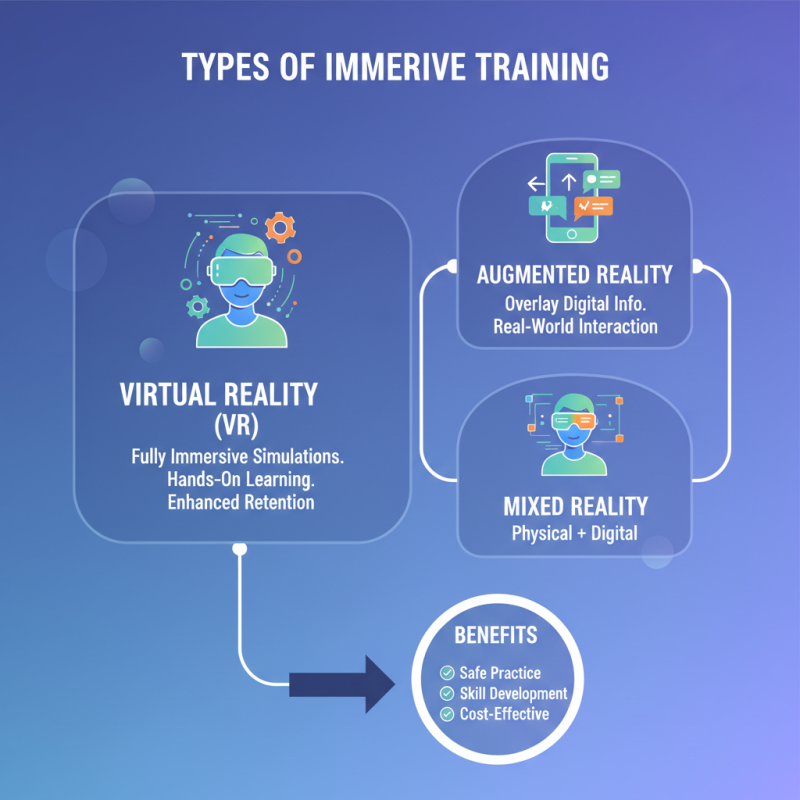
Immersive training is transforming how businesses approach employee development. But what exactly is immersive training? At its core, it combines virtual reality (VR), augmented reality (AR), and simulations to create engaging learning environments. These methods help employees practice skills in a safe space, where failure does not have real-world consequences. According to a report by PwC, learners in VR environments were 4 times more focused than in traditional classrooms.
The purpose of immersive training extends beyond traditional education. It caters to various learning styles and increases retention rates. According to a study by the University of Oxford, immersive methods can boost retention by up to 75%. This is a significant improvement over standard training methods. It indicates the potential of immersive training to address employees' diverse needs effectively.
However, the transition to immersive training is not without challenges. Companies may face initial resistance from staff who are unfamiliar with new technologies. Moreover, the cost of developing immersive content remains a concern for many businesses. These factors require reflection and strategic planning to ensure successful implementation. Balancing innovation with practicality is key to harnessing the full potential of immersive training.
The Key Benefits of Immersive Training for Businesses
Immersive training offers businesses a transformative solution. By engaging employees in interactive environments, it enhances learning retention. Businesses can design simulations that mirror real-life scenarios. This hands-on experience allows for practical application of skills.
Another key benefit is increased engagement. Traditional training methods often lead to disengagement. Immersive training captivates attention, making the learning process enjoyable. Employees feel more connected to the content. They are likely to participate actively.
While the benefits are clear, challenges exist. Creating immersive experiences can require significant resources. Not every business may have access to the latest technology. However, investing in this form of training can yield high returns. It encourages a culture of continuous learning. Businesses must reflect on how to streamline resources to achieve this goal effectively.
Benefits of Immersive Training for Businesses
This chart illustrates the key benefits of immersive training for businesses. As represented, increased engagement and improved retention are the most significant advantages, highlighting the effectiveness of immersive training solutions.
Types of Immersive Training: Virtual Reality, Augmented Reality, and More
Immersive training is transforming how businesses approach learning and development. Virtual Reality (VR) provides a fully immersive experience. Trainees can engage in realistic simulations, from handling equipment to navigating complex scenarios. This hands-on approach enhances retention and builds confidence. Employees learn by doing rather than just observing.
Augmented Reality (AR) blends digital information with the real world. It overlays useful data on physical objects, making training more interactive. For example, a technician might see assembly instructions projected onto a machine. This method allows for immediate application and contextual learning.
While these technologies present exciting opportunities, challenges remain. Not all employees may adapt easily to such innovative methods. Some might feel overwhelmed by high-tech setups. Continuous feedback is essential to refine these training tools. Regular assessments can identify areas for improvement, ensuring that immersive training meets business goals effectively.
Implementation Strategies for Effective Immersive Training Programs
Immersive training programs provide a unique opportunity for businesses. Companies that adopt these immersive methods often see improved engagement and retention rates. A report from PwC highlights that employees trained through virtual reality (VR) can retain information four times longer than in traditional settings. This insight urges businesses to consider modern training strategies.
To implement effective immersive training, organizations should focus on tailored content. Customization helps address specific business needs, enhancing learning relevance. Data from Gartner reveals that 70% of employees prefer training that leverages their personal experiences. Integrating these insights ensures a more personalized learning journey, making the training more impactful.
Moreover, assessments are crucial in immersive training. Regular feedback loops allow for continuous improvement. According to Training Industry, 60% of learning and development leaders note that tracking progress is essential. Without appropriate metrics, it's challenging to measure success or identify areas needing enhancement. Exploring these strategies helps organizations build efficient training programs that resonate.
Measuring the Success of Immersive Training in Business Contexts
Measuring the success of immersive training in business contexts requires a thoughtful approach. Traditional metrics may not capture the depth of engagement that immersive methods provide. For instance, assessing employee retention rates after immersive experiences can yield insights into long-term retention.
Observation is vital. Trainers can monitor employees' real-time reactions during immersive sessions. This direct feedback helps evaluate how well the training aligns with learning objectives. Surveys, while useful, may not reflect immediate impacts, as they rely on self-reported data.
Consider how immersive training affects performance. Anecdotal evidence shows improvement in skills over time. However, quantifying this can be challenging. Tracking specific KPIs, like increased sales or customer feedback scores, can offer clearer insights. A mix of qualitative and quantitative data may be necessary for a holistic assessment. Engaging employees in discussion about their experiences can shed light on aspects that worked and those needing refinement.