Leave Your Message
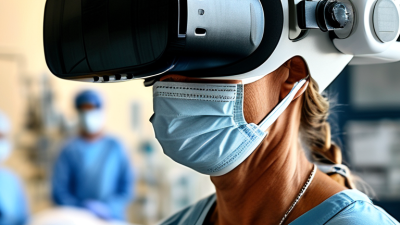
China is becoming a serious sourcing base for Vr Training In Healthcare solutions. Its suppliers combine simulation software, head-mounted displays, motion tracking, and clinical education services. Yet a polished demo does not prove clinical value. That distinction matters.
Grand View Research estimates that the global healthcare virtual reality market will expand strongly through 2030. Its analysis highlights rising demand for surgical simulation, rehabilitation, pain management, and medical education. PwC’s 2020 report, The Effectiveness of Virtual Reality Soft Skills Training, found that VR learners completed training four times faster than classroom learners. They also reported higher concentration and greater confidence. These findings support VR’s potential, but they do not replace clinical validation.
Jeremy Bailenson, founding director of Stanford’s Virtual Human Interaction Lab, said, “The single most important thing about VR is that it is an embodied experience.” That insight explains why healthcare trainees can practise procedures inside realistic, repeatable environments. A learner can hold a virtual instrument, observe tissue responses, and repeat a difficult step without risking patient safety. The experience feels practical. Sometimes, it still feels imperfect.
When comparing China’s suppliers, buyers should examine medical content accuracy, headset hygiene, data security, language support, instructor dashboards, and after-sales training. Independent usability testing is essential. So are measurable outcomes, including error reduction, skill retention, and assessment scores. Certification claims require careful verification. Some vendors may describe prototypes as finished products. That can create expensive surprises.
This guide evaluates China-based VR training suppliers through an E-E-A-T-focused lens. It considers documented expertise, clinical partnerships, technical reliability, and transparent evidence. The strongest supplier is not always the cheapest. It is the one that performs consistently in a real training room.
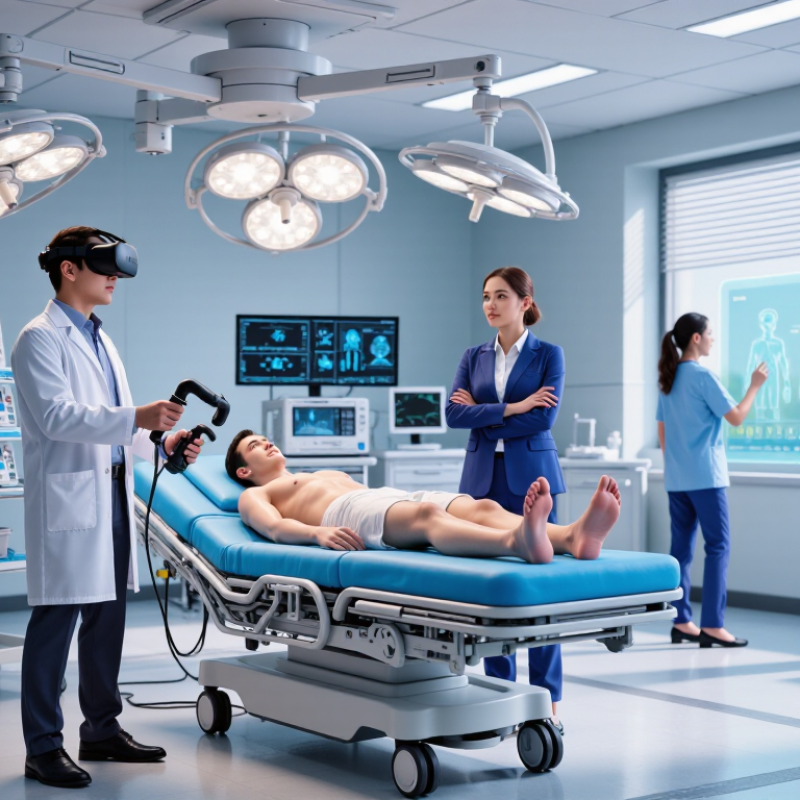
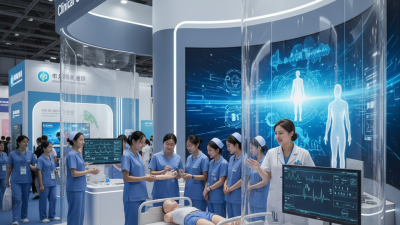
China’s healthcare VR training sector is expanding across hospitals, medical universities, rehabilitation centers, and emergency education programs. Its users include surgeons, nurses, therapists, paramedics, and students. Common devices include standalone headsets, desktop simulators, motion trackers, haptic controllers, and anatomical models. Some training rooms also use washable face interfaces, which support repeated clinical practice.
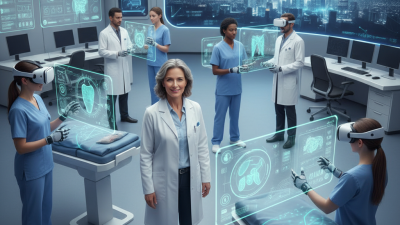
Clinical applications are becoming more specific. Surgical teams can rehearse anatomy and procedural steps before entering an operating room. Nursing students can practice triage, medication checks, infection control, and communication with virtual patients. Rehabilitation programs may use immersive tasks to support balance, mobility, and motor recovery. These systems should connect with approved teaching plans, trained instructors, and measurable assessments. VR is not automatically effective. Some programs still measure attendance instead of competence, which needs serious reflection.
Tips: Choose devices with stable tracking, clear data protection policies, and easy cleaning procedures. Ask suppliers for evidence from pilot studies, user training, maintenance records, and curriculum integration. Test the system with real clinicians before wider deployment. Small trials reveal practical problems, such as motion sickness, uncomfortable headsets, weak simulation feedback, or confusing controls. Local clinical workflows also matter. A technically impressive platform may fail when it does not match hospital routines.
| Category | Healthcare VR Training Scope in China | Primary Users | Typical Devices | Clinical or Educational Application | Implementation Considerations |
|---|---|---|---|---|---|
| Medical Student Education | Immersive learning for anatomy, physiology, pathology, clinical reasoning, and procedural orientation. | Medical undergraduates, postgraduate trainees, and standardized residency-training participants. | Standalone head-mounted displays, PC-connected headsets, motion controllers, and desktop simulation stations. | Three-dimensional anatomy exploration, virtual patient assessment, and repeatable practice before laboratory or bedside teaching. | Content should align with Chinese medical curricula and be supervised by qualified teaching staff. |
| Surgical Skills Training | Simulation of surgical workflows, instrument handling, anatomy recognition, and decision-making under controlled conditions. | Surgical residents, specialist physicians, operating-room nurses, and continuing-education learners. | VR headsets, hand controllers, haptic interfaces, motion tracking, and optional physical instrument replicas. | Laparoscopic orientation, orthopedic planning practice, endoscopic navigation, and operating-room teamwork. | VR supplements rather than replaces cadaveric, benchtop, animal, or supervised clinical training. |
| Nursing and Allied Health | Scenario-based training for assessment, communication, infection control, emergency response, and patient-care procedures. | Nursing students, practicing nurses, paramedics, rehabilitation therapists, and care assistants. | Standalone headsets, 360-degree video systems, motion controllers, and virtual patient platforms. | Vital-sign assessment, medication safety, wound care, triage, basic life support, and patient communication. | Scenarios should include Chinese-language instructions and measurable performance criteria. |
| Emergency and Critical Care | Rapid-response simulations that allow teams to rehearse rare, high-risk, and time-sensitive events. | Emergency physicians, intensive-care teams, nurses, ambulance personnel, and hospital first responders. | VR headsets, virtual patient systems, room-scale tracking, physiological monitors, and optional CPR mannequins. | Cardiac arrest response, airway management, shock recognition, disaster triage, and team communication. | Training value increases when VR is combined with physical simulation and structured debriefing. |
| Rehabilitation Training | Interactive environments for motor, balance, cognitive, and functional rehabilitation exercises. | Physiotherapists, occupational therapists, rehabilitation physicians, patients, and caregivers. | Headsets, depth cameras, motion sensors, balance platforms, and large-screen projection systems. | Post-stroke upper-limb training, gait and balance exercises, pain distraction, and cognitive rehabilitation. | Patient selection, fall prevention, cybersickness monitoring, and therapist oversight are essential. |
| Mental Health and Behavioral Care | Controlled exposure and immersive environments for clinician education and selected therapeutic interventions. | Psychiatrists, psychologists, counselors, psychiatric nurses, and supervised patients. | Headsets, headphones, hand controllers, and therapist-managed software platforms. | Exposure-based learning, relaxation training, social-skills practice, and clinician communication training. | Clinical governance, informed consent, privacy protection, and monitoring of distress are required. |
| Patient Education | Immersive explanations that help patients understand anatomy, procedures, treatment plans, and self-care. | Patients, families, caregivers, health educators, and clinical communication teams. | Headsets, tablets, 360-degree displays, and interactive projection screens. | Preoperative orientation, rehabilitation instructions, chronic-disease education, and medication counseling. | Use plain Chinese, accessible interfaces, and alternatives for patients who cannot tolerate immersive viewing. |
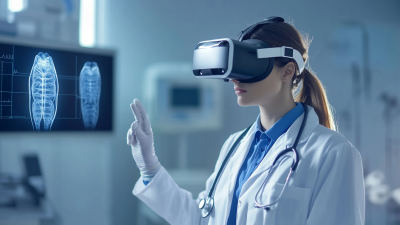
| Medical Imaging and Procedure Planning | Three-dimensional visualization of patient-specific imaging data for education, planning, and multidisciplinary discussion. | Radiologists, surgeons, medical students, biomedical engineers, and multidisciplinary clinical teams. | High-resolution headsets, stereoscopic displays, 3D workstations, and tracked controllers. | Review of CT or MRI-based anatomy, tumor visualization, vascular anatomy, and preoperative rehearsal. | Image segmentation accuracy, data security, interoperability, and clinical validation must be assessed. |
| Remote and Distributed Training | Shared virtual classrooms and standardized simulation content for hospitals, universities, and regional training centers. | Urban teaching hospitals, county-level hospitals, medical universities, and rural healthcare trainees. | Networked headsets, desktop computers, local servers, cloud platforms, and large-screen teaching systems. | Remote mentoring, standardized skills assessment, case conferences, and continuing professional development. | Stable connectivity, local technical support, data localization requirements, and offline backup options should be considered. |
| Device Selection Criteria | Selection should be based on learning objectives rather than immersion alone. | Procurement teams, simulation-center directors, educators, clinicians, and information-security staff. | Display resolution, field of view, tracking method, battery life, hygiene accessories, controllers, and haptic equipment. | Device choice affects realism, setup time, cleaning workflow, accessibility, and the ability to scale training. | Evaluate comfort, motion sickness, multilingual support, maintenance, cybersecurity, interoperability, and total cost of ownership. |
| Assessment and Quality Measures | Effective programs measure knowledge, technical performance, teamwork, confidence, retention, and transfer to clinical practice. | Educators, clinical supervisors, quality managers, and institutional review teams. | Learning-management systems, performance dashboards, video recording, motion analytics, and standardized checklists. | Pre-test and post-test comparison, objective structured clinical examinations, error tracking, and delayed retention testing. | VR should be evaluated as part of a blended curriculum, with outcome data reviewed by clinical educators. |
| Supplier Evaluation Framework | A suitable supplier provides devices, validated educational content, implementation services, training, and ongoing technical support. | Hospitals, universities, simulation centers, public-health institutions, and healthcare training organizations. | Hardware systems, software platforms, haptic tools, tracking infrastructure, and content-authoring tools. | Pilot deployment, curriculum integration, user analytics, equipment management, and scalable multi-site delivery. | Compare clinical accuracy, evidence of educational effectiveness, privacy controls, service capability, localization, and lifecycle costs. |